
The pattern in these quotes is unmistakable: the people closest to AI-generated code are the most worried about understanding it.
Andrej Karpathy coined "vibe coding" as a weekend hobby and within a year renamed the professional version "agentic engineering" — specifically because the professional version requires understanding, oversight, and expertise. Simon Willison draws a hard line: if you reviewed and understood the code, it's not vibe coding anymore, it's just using a tool. Addy Osmani gave the cost a name: comprehension debt.
This is where technical publishing matters more than it ever has. When AI writes the code, the human explanation of that code becomes the scarce resource. The tutorials, the architecture decisions, the "here's what went wrong and here's how we fixed it" posts — these are the artifacts that prevent comprehension debt from compounding into system failure.
The coming bifurcation is real: AI generates the code, humans write the understanding. The developers who can do both — build with AI and explain what they built — will be the most valuable people in any engineering organization.
The Human Voices Explaining What Happens When AI Can Write Code But Not Explain It
Here are the people living inside this gap — the researchers, engineers, and builders watching AI-generated code pile up faster than anyone can comprehend it.
There's a new kind of coding I call 'vibe coding', where you fully give in to the vibes, embrace exponentials, and forget that the code even exists." — Andrej Karpathy, co-founder of OpenAI, former head of AI at Tesla. Source
"As I listen to people who are serious with AI-assisted programming, the crucial thing I hear is managing context." — Martin Fowler, January 2026. Source
"I wonder if two humans driving a bunch of agents would be better than one human driving many — combining the benefits of pairing with the greater code-generative ability of The Genies." — Martin Fowler, February 2026. Source
"The developer function of writing code will slowly disappear over the next five years and will likely be gone altogether 15 years from now." — Holger Mueller, analyst at Constellation Research, 2023. Source
"Developers need to slow down and use practices such as pair programming, refactoring, and test-driven development to address technical debt AND cognitive debt." — Margaret-Anne Storey, University of Victoria, at Thoughtworks' Future of Software Engineering Retreat, 2026. Source
"Vibe coding your way to a production codebase is clearly risky. Most of the work we do as software engineers involves evolving existing systems, where the quality and understandability of the underlying code is crucial." — Simon Willison, co-creator of Django, independent developer. Source
"If an LLM wrote every line of your code, but you've reviewed, tested, and understood it all, that's not vibe coding in my book — that's using an LLM as a typing assistant."— Simon Willison. Source
"I think it's really useful to have a model hallucinate at you early because it helps you get that better mental model of what it can do. And the local models hallucinate wildly."— Simon Willison, on the Pragmatic Engineer Podcast. Source
"Comprehension debt is the growing gap between how much code exists in your system and how much of it any human being genuinely understands. Unlike technical debt, which announces itself through mounting friction, comprehension debt breeds false confidence." — Addy Osmani, engineering lead at Google. Source
"AI generates code far faster than humans can evaluate it. That sounds obvious, but the implications are easy to underestimate." — Addy Osmani. Source
"Without a channel for the AI to expose its own confidence — 'this part's correct… this part, maybe double-check' — developers risk blindly trusting hallucinated logic that compiles, but collapses in production."— Alex Gu, MIT graduate student, lead author of AI coding roadblocks study. Source
"I don't really have much control over what the model writes."— Alex Gu, MIT. Source
"The gap between developers who get mediocre AI output and those who get excellent output is not the AI model — it is the developer's ability to decompose tasks, manage context, and provide clear constraints."— BuildFastWithAI, 2026 developer survey. Source
"While 76% of developers are using or planning to use AI coding assistants, only 43% trust their accuracy — a telling gap between adoption and confidence."— Stack Overflow / industry survey data, 2025. Source
"I'd define vibe coding as having a vision that you can't execute, but AI can."— Tobin South, AI security researcher at MIT Media Lab. Source
"Unmanaged AI-generated code drives maintenance costs to 4x traditional levels by year two as technical debt compounds."— BuildMVPFast, citing DORA 2024-2025 data. Source
"Pull requests per developer increased 20% with AI help, but incidents per pull request increased 23.5%."— DORA metrics, 2024-2025. Source
"Developers most often describe postponed testing, incomplete adaptation, and limited understanding of AI-generated code, suggesting that AI assistance affects both when and why technical debt emerges."— Abdullah Al Mujahid et al., Missouri S&T, MSR 2026 paper on GenAI-Induced Self-Admitted Technical Debt. Source
"TODO: Fix the Mess Gemini Created." — Actual code comment found in public GitHub repositories, from the MSR 2026 research paper analyzing 6,540 LLM-referencing code comments. Source
"45% of AI-generated code introduced known security vulnerabilities from the OWASP Top 10 list." — Veracode 2025 GenAI Code Security Report, analyzing 100+ LLMs across 80 coding tasks. Source
"Among 576,000 code samples analysed, AI tools suggested 205,474 unique software packages that did not exist." — Package hallucination research, cited in Dextra Labs vibe coding guide. Source
"As an industry we've been pushing: Automate. Automate. Automate. We should have been saying: Understand. Understand. Understand. Because if you understand what you're doing, you can automate if you want to. Automation is the serialization of understanding." — Kelsey Hightower, former Google distinguished engineer. Source
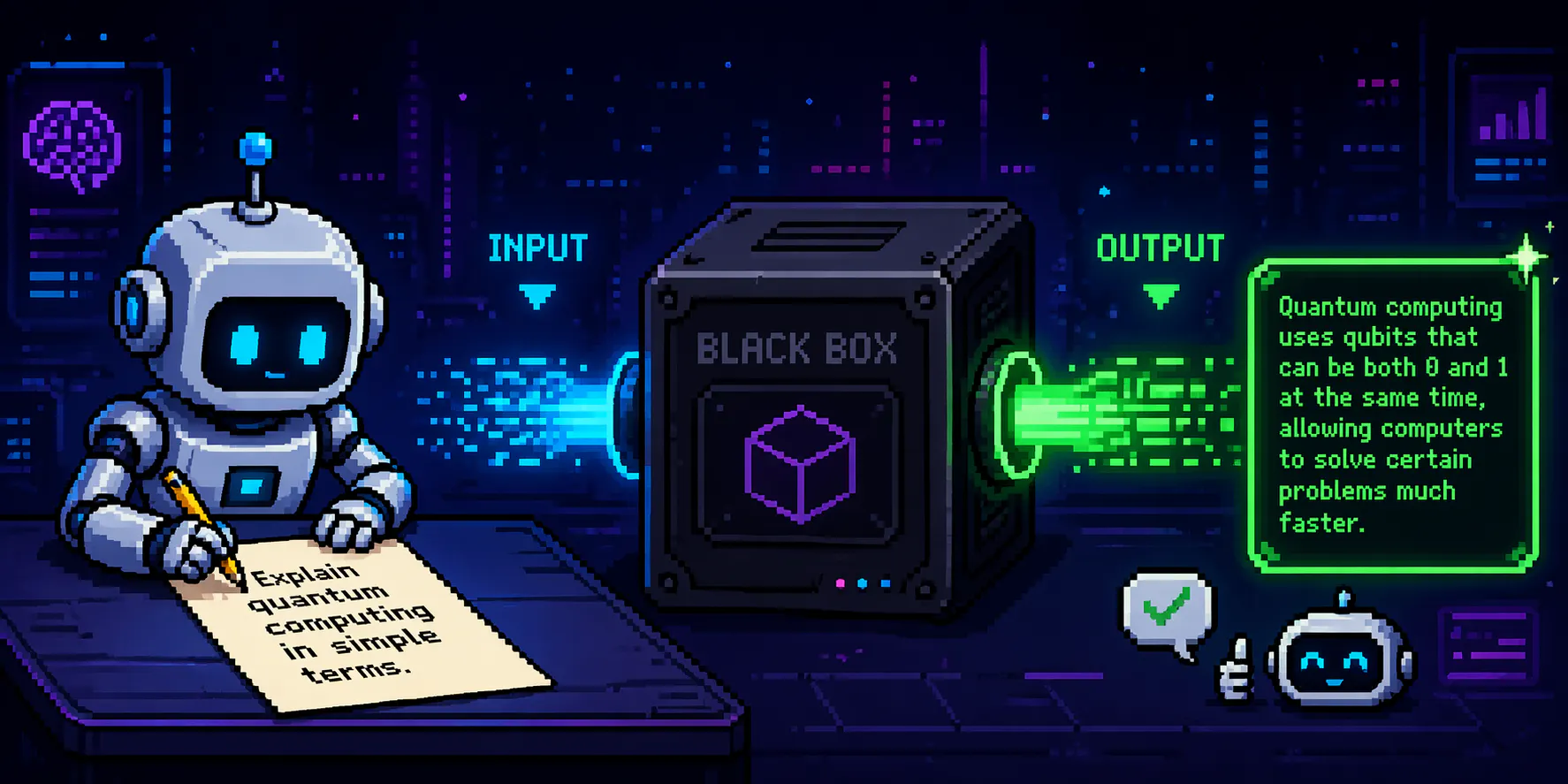
"I will choose to continue to understand what's in the box." — Kelsey Hightower, on refusing to treat AI as a black box. Source
"Everyone is a junior engineer when it comes to AI."— Kelsey Hightower, KubeCon Europe 2026. Source
"Personally, my current favorite is 'agentic engineering': 'agentic' because the new default is that you are not writing the code directly 99% of the time, you are orchestrating agents who do and acting as oversight — 'engineering' to emphasize that there is an art & science and expertise to it."— Andrej Karpathy, one year after coining "vibe coding." Source
"Some professionals have no idea why they're doing what they're doing. They're just assigned the Jira ticket, and off they go like little robots. A 20-year career might look more like 20 years of one-year experience."— Kelsey Hightower, HAProxyConf 2025 keynote. Source
"At Anthropic, engineers adopted Claude Code so heavily that today ~90% of the code for Claude Code is written by Claude Code itself."— Addy Osmani, describing the recursion problem. Source
"AI coding assistants optimize for 'does it work?' not 'is it safe?' They will happily generate code with hardcoded secrets, deprecated cryptography, or SQL injection vulnerabilities."— Mashrulhaque, 2026 Developer Predictions. Source
"Vibe coding raises productivity by lowering the cost of using existing code, but it weakens the user engagement through which many maintainers earn returns." — Researchers from multiple universities, "Vibe Coding Kills Open Source" paper, January 2026. Source
"In January 2026, a paper titled 'Vibe Coding Kills Open Source' argued that vibe coding reduces user engagement with open-source maintainers, which has hidden costs. Vibe coding raises productivity by lowering the cost of using existing code, but it weakens the user engagement through which many maintainers earn returns."— Academic researchers, speaking with The Register. Source
"Y Combinator reported that 25% of startup companies in its Winter 2025 batch had codebases that were 95% AI-generated."— Y Combinator, Winter 2025 batch data. Source
"The 'vibe coding hangover' is real: engineers inheriting AI-generated codebases find them difficult to extend. Code produced in high volumes, without documentation and without deliberate structure, becomes expensive to maintain."— Fast Company, September 2025. Source
"GitHub hit 43 million pull requests per month in 2025, up 23% from last year. Developers are shipping more, not less. But that code still needs to be secure, and AI tools are not great at that part."— GitHub data / developer analysis. Source
"Treat the LLM as a powerful pair programmer that requires clear direction, context and oversight rather than autonomous judgment."— Addy Osmani, on his LLM coding workflow for 2026. Source
"The magician's power comes from being the only one that understands how something works. Learn how it works and they won't be able to trick you."— Kelsey Hightower. Source
Coding agents can now generate working software. They can scaffold an entire application from a voice prompt, fix their own bugs in a loop, and ship features faster than any human team. But the blog posts explaining how that software works — the tutorials, the architectural deep dives, the "here's what went wrong in production" postmortems — still need to be written by someone who understand it.
This is the explanation gap: AI can produce the artifact but not the understanding. And it's creating a new category of debt that compounds faster than anyone expected. We're entering an era where the most valuable person in a software organization isn't the one who writes the code. It's the one who can explain it.